06.10.26
News
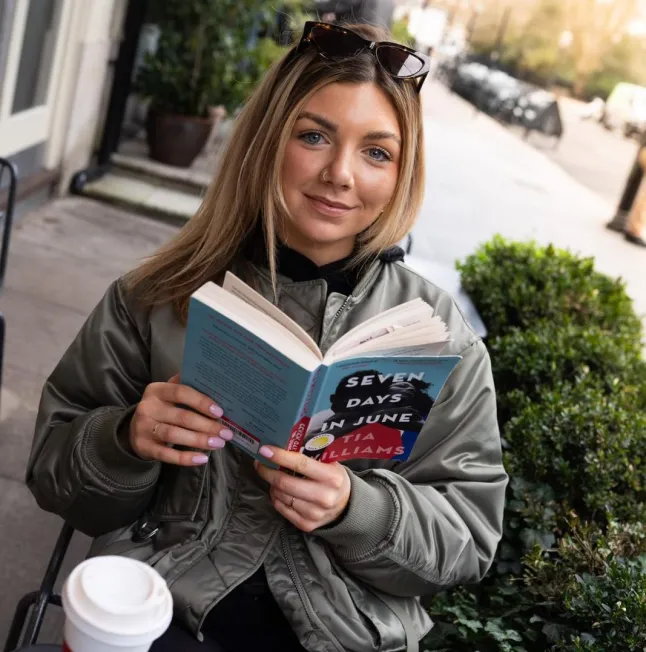
From BookTok bestsellers to packed-out literary events, reading is becoming an increasingly social pursuit. But behind the aesthetic hardbacks and celebrity reading lists lies something more interesting: a generation searching for community away from the screen. We spoke to Lucy Ellis, founder of Lucy’s Book Club and former B team member, about the very modern return of the book club.
There was a time when the words book club conjured a fairly specific image: a living room, a bottle of wine, perhaps a half-read paperback being politely discussed between people who already knew one another. In 2026, things look rather different. Book clubs are filling cafés, independent bookshops and event spaces. They come with waiting lists, WhatsApp communities and Instagram accounts. Artists have them. Models have them. TikTok has turned crying over fictional characters into a viable form of cultural criticism. And in cities where making a new friend can sometimes feel considerably more difficult than getting a dinner reservation, the act of sitting in a room with strangers and talking about a novel has become unexpectedly desirable. Or, perhaps, desirable again.
The numbers suggest that this is more than anecdotal enthusiasm. Book-club listings on Eventbrite in the UK increased by 350% between 2019 and 2023, including a 41% rise in 2023 alone, while Meetup recorded a 14% increase in RSVPs to UK book clubs between January 2023 and January 2024. Nielsen IQ Book Data has since described this period as “the age of social reading”, finding that social media, video platforms, reading groups and recommendations from friends and family had all reached their highest recorded share of UK book discovery in the year to March 2025. The interesting story, then, isn’t simply that people are reading. It is that reading has become social currency.
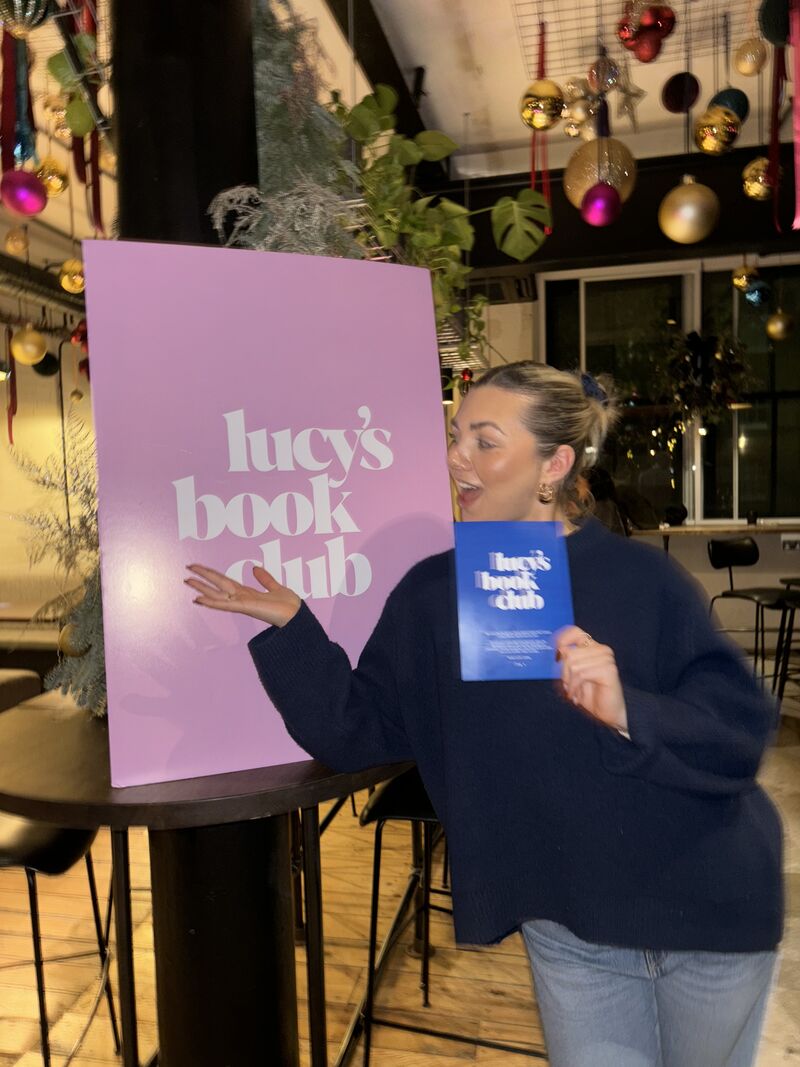
Lucy didn’t begin Lucy’s Book Club with a business plan. She began it with an Instagram Story. A lifelong reader, she had spent lockdown posting book reviews to her personal account while furloughed, a period she remembers as one of “reading endless books”. The idea of starting a club had been sitting in the back of her mind for years, but it wasn’tuntil a holiday in July 2023 that she decided to test it. “I first floated the idea on my Instagram Story, which at the time was just my normal, fairly small personal Instagram, asking: ‘If I started a book club, would people want to come?’” The answer, fairly emphatically, was yes. She created a WhatsApp group, selected Yomi Adegoke’s The List, chose 12thSeptember 2023 and booked a table for ten people at the Corner Café at Tate Modern. Fifteen arrived. “The WhatsApp group had 100 people in it from the start, and quickly grew to 1,000,” she says. The second event attracted roughly twice as many attendees as the first, the third brought around 40 and, by the fourth, 95 people arrived. “I was in shock,” Lucy says. “And so were the staff.”
There is something wonderfully unstrategic about the beginnings of it all, and perhaps that is precisely why it worked. “From there, word of mouth is what made it grow,” she says. The motivation behind it was equally personal. Reading had been a constant in Lucy’s life since childhood and something she repeatedly turned to for her mental wellbeing. At the time, she was working in a particularly stressful job and wanted “a creative outlet and something that was totally unrelated to work to focus on once a month”, while also meeting other people who loved books as much as she did. Three years later, that instinct looks rather prescient.
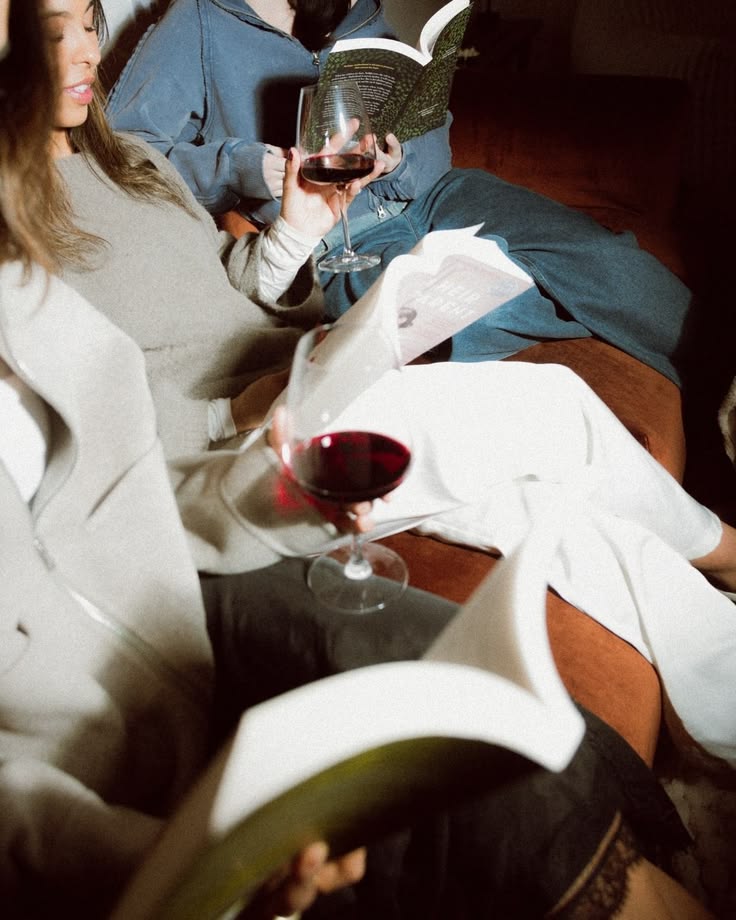
Ask Lucy why book clubs are having such a moment and she doesn’t hesitate. “People want community, they crave it.” She sees their rise partly as “a rebellion against the constant brain rot we are fed online”, from endless scrolling to increasingly AI-heavy feeds, but also as part of a wider shift in how reading is perceived. “People [are] accepting, finally, that reading books is a cool thing to do,” she jokes. She compares it to the rise of run clubs: when she first moved to London, much of the organised socialising she encountered revolved around drinking or sport. “Run clubs, fitness clubs, sports teams — all amazing things, by the way — might not be for everyone.” Books provide another entry point. “People want to talk about books. People want to make friends in their towns and cities. How many times have you got into a conversation about books with someone? It’s the easiest type of chat to start.”
For all our apparent hyper-connectivity, modern adulthood can be remarkably poor at providing opportunities for friendship, particularly in a city. “We live in this huge city with millions of strangers around us, and it can be so hard to make friends outside of your workplace or friends you might have known before moving here,” Lucy says. Since founding the club, she has watched friendships blossom between attendees, groups return together after first meeting there and members go on to create their own book clubs with people they met through Lucy’s. “What surprised me the most is how many people come on their own, and feel so happy and confident to do that.” The book, it seems, is the invitation. The connection is the point.
That sense of connection feeds into a phrase that appears increasingly often in conversations around the resurgence of organised hobbies: the third space. Not home, not work, but somewhere in between. Run clubs have become one version of it, as have supper clubs, craft evenings, listening parties and ceramics classes. Lucy describes her own book club as a “safe, third space”, particularly for women and for people who might find more conventional social events intimidating. “A lot of us book lovers are quite introverted,” she says. “Coming to an event on our own is terrifying to some people, but knowing a book club is an inclusive space to chat and make friends is so important.” There is something reassuring about arriving with a conversational safety net already built in; nobody needs to concoct an opening line because there is a book sitting between you. And the conversation rarely remains there. “Conversations about our book of the month quite quickly segue into conversations about real life issues, discussions about our own experiences.”
Lucy also points to women’s safety, along with changing attitudes towards drinking and nightlife, as an overlooked part of the appeal. “I think women’s safety plays a huge part. Communities provide a safe space for women, and men too, to connect.” Mostly, however, she thinks people are simply tired of experiencing one another through glass. “We look at screens all day long, so when it comes to socialising – let us outside!” she says. “We want to chat to people in depth, have meaningful conversations, build real connections and friendships that go beyond a like on Instagram.”
For anyone worried that a room filled with people discussing literature might sound intimidating, Lucy is determined that hers isn’t. “It’s important to me that my book club doesn’t scare people off by being some super intellectual thing,” she says. Members don’t even have to finish the book. “I always tell people that you don’t need to have even read the book to attend. If you want to just come and chat with nice people, there is a space for you.” Literary analysis can remain firmly optional too. “You can just say, ‘that character was a dickhead’, if you want, and be done.”
The modern book club may be flourishing precisely because it has shrugged off some of the cultural baggage once attached to being well read. This is not necessarily about having the most intellectual interpretation in the room. It is about having an interpretation at all. Reading remains intensely private. Ten people can read exactly the sameparagraphs and experience ten subtly different books, and for Lucy, the magic comes when those private interpretations meet. One person might read something as hopeful, another as bleak, while someone else may dislike the very thing another reader loved. “It brings you thoughts and opinions you may not have had otherwise,” she says. “It’s like the book gets bigger than what you just read on the page, and I think that brings us all closer.”
The great irony, of course, is that our desire to get away from our phones has partly been fuelled by what we discovered while staring at them. BookTok has gone from a niche internet subculture to a genuine commercial force within publishing. In 2025, more than 11 million UK book sales worth £86 million were attributed to BookTok, while TikTok says 51% of UK 16-to-25-year-olds now discover new books through the platform. But for Lucy, reducing BookTok to sales figures misses what makes it interesting. “It has played a huge role and I think it’s brilliant,” she says. She sees social media as a continuation of something readers have always done, whether through Amazon reviews, Goodreads, Facebook groups, Reddit threads or conversations with booksellers. “Social media has just made it easier to join in the conversation.”
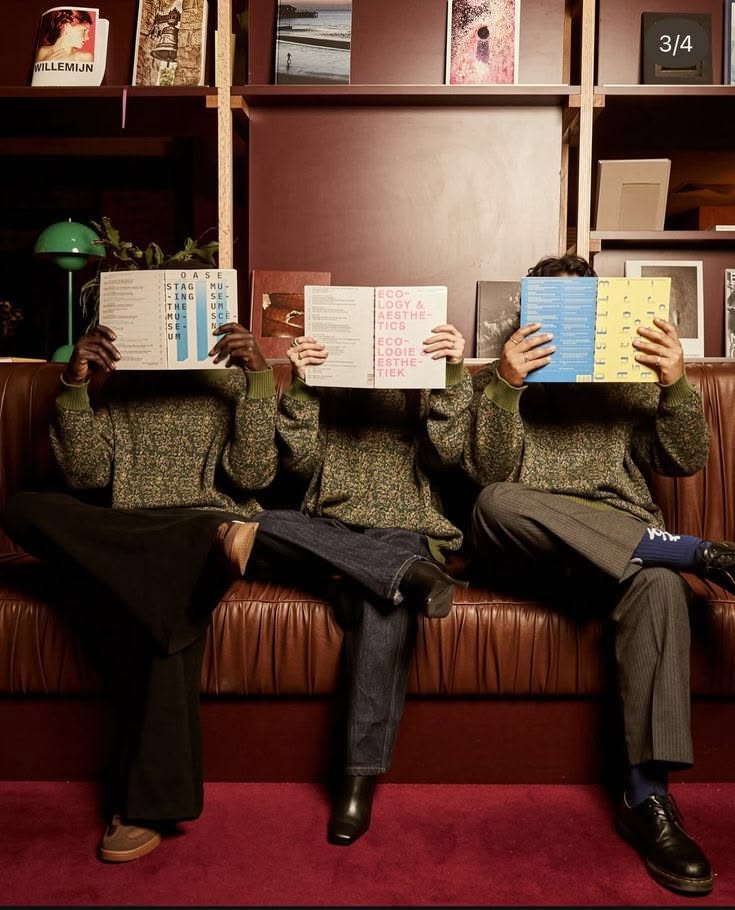
It has also collapsed the distance between reader and writer. “We’re able to hear directly from authors, learn about their inspirations and their journeys, and find out what’s coming next.” Lucy is particularly resistant to the slightly sniffy attitude that can surround BookTok and Bookstagram. “I think BookTok and Bookstagram get a bad rep,” she says. “Sure, there are always going to be a few bad apples and some people promoting awful books, but I think on the whole, it’s amazing to have a community for book lovers online.”
“I was bullied at school for liking books, so to have an entire corner of the internet dedicated to my favourite passion is amazing.” Reading hasn’t simply become visible online. It has become identity.
BookTok’s influence extends beyond publishing, offering a neat case study in the way cultural authority itself has changed. A reader can discover an overlooked novel years after publication, tell another reader, who tells 50,000 followers, who in turn create thousands of videos about it. Suddenly the old book is a new book. Colleen Hoover’s It Ends WithUs, first published in 2016, became the bestselling book in the UK six years later after gaining enormous momentum through TikTok. Madeline Miller’s The Song of Achilles, originally published in 2011, similarly found a new generation online, ultimately prompting a tenth-anniversary edition and a significant new wave of sales.
The implications stretch across communications, marketing and traditional media. Readers are not simply the audience waiting at the end of a campaign; they can be the reason the campaign exists in the first place. Recommendations often work precisely because they don’t particularly look like recommendations. A tearful video captioned “I will never emotionally recover from this” may sell a novel rather more convincingly than a perfectly constructed press quote ever could. That peer-to-peer quality is what Lucy recognises in her own community. “Nothing starts a conversation more than books,” she says. “Post a book on your Story right now and I bet someone will reply straight away talking or asking about it.”
Celebrity culture has naturally noticed too. Oprah Winfrey demonstrated the commercial power of the celebrity recommendation decades ago, while Reese Witherspoon has since turned her reading community into a formidable cultural and production engine. Dua Lipa and Kaia Gerber have brought their own interpretations to the format. Lucy cites that influence herself: “Oprah and Reese Witherspoon have created empires off the back of their book clubs. Dua Lipa is a tastemaker in the literary world. Having such powerful influences encouraging more people to read has been amazing to watch.”
What has changed is the ecosystem surrounding those recommendations. A book no longer exists alone; it can arrive with a playlist, an author interview, a filmed conversation, a podcast, a live event, a TikTok reaction and eventually an adaptation. Books now occupy the same lifestyle territory as restaurants, fashion, travel and beauty. What you read has become another expression of taste. Yet Lucy’s experience suggests it would be a mistake to dismiss the trend as merely aesthetic. When she launched the Instagram account for Lucy’s Book Club, it was purely practical. “I originally only opened an Instagram account to keep members updated on book club dates and reads,” she says. Instead, it developed into “a really supportive place” and became essential to promoting events and creating opportunities she had never expected.

This is perhaps the most interesting relationship between BookTok and the book-club boom. Digital culture hasn’t replaced physical community; at its best, it facilitates it. You see the novel on TikTok, save it, buy it and spend a weekend reading it alone. Then you leave your flat to tell 40 strangers why the ending infuriated you.
There is a pleasing contradiction to all of this happening during the UK’s National Year of Reading, launched in response to a long-term decline in reading for pleasure. The wider cultural appetite around books may therefore matter for reasons beyond sales. Lucy thinks book clubs belong to a broader desire for what she describes as “anti-brain rot culture”.“I’ve been seeing a lot about this ‘analog’ living and ‘anti brain rot’ media at the moment,” she says, before adding the perfect caveat: “Ironically, always mid-doom scroll.” She imagines more third spaces developing around hobbies and creative pursuits: places “that inspire and unlock creativity, places that make us feel seen and included, that take you out of the job you might hate and into a room of people who you have something in common with”. “I really do think it’s here to stay.”
Perhaps none of this is surprising. After years spent optimising almost every element of modern life for speed and convenience, many of the experiences currently gaining cultural cachet require precisely the opposite: film cameras, vinyl, craft, long dinners, printed magazines and physical books. Things that ask us to concentrate, and increasingly, things that ask us to show up.
For Lucy, there is one final chapter to the story that feels particularly fitting. Before there was Lucy’s Book Club, there was B. “Oh my goodness, SO many!” she says when asked whether any skills from her agency days have proved useful. “Working at B taught me to be a perfectionist, to be creative, and how to organise and run and market an event.” Even that first gathering received the agency treatment. “I made a logo and ordered and printed bookmarks and made a PowerPoint to print out with discussion questions on.” She laughs that the early design was “quite questionable”, but the instincts were already there. PR had taught her how to manage guest lists, negotiate fees, work with suppliers and vendors, understand events and navigate the online world. “I don’t think I’d have ever thought to grow this into a real ‘thing’ had it not been for my time at B,” she says. “My time there really shaped me as a person and grew my confidence massively.”
The success of the modern book club isn’t really about books. It is about belonging. BookTok works because readers trust other readers. Lucy’s Book Club grew because members told their friends. The communities thriving now are not simply creating content for people to consume; they are creating something people actively want to be part of.